Footprints Project
Since 2005, travelers like you have helped us change the world through micro-donations.
-
A total of
2895
Travelers
-
donated
$20002.1
(100% funded) -
to help reduce
Poverty
-
impacting
80
people -
in
India
Project Background
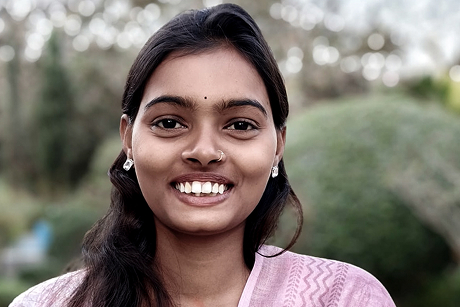
Baseline survey findings reveal that many girls experience stress at home due to household chores, lack of affection, dropping out of school, discrimination, and sexual violence. These insights inform the program's strategy and interventions.
Family expectations
81% of girls report that a lack of family support is their main obstacle. Many parents expect girls to prioritise household chores or contribute to the family income instead of continuing their education. Consequently, girls often lack time for school, friendships, or other activities.
Economic hardship
54% of girls identify financial constraints as limiting education and career options. Costs of schooling, uniforms, and transportation make continued attendance difficult.
Skills gap
Adolescent girls in Bihar lack opportunities to learn technical, soft, or knowledge-based skills, which leaves them unprepared for employment and limits confidence in pursuing aspirations.
Early marriage norms
Cultural and community pressure continues to push girls into early marriage, despite their aspirations to study and work. Girls’ voices are rarely considered in these decisions.
Unsafe environments
Harassment and community restrictions severely limit girls’ mobility and access to education. Most girls (76%) are not allowed to leave the house alone, except for school travel, and even then can face risks.
Discrimination
Caste and gender bias further marginalise girls, particularly in employment and schooling. Girls from lower castes are more likely to be engaged in exploitative, unpaid work.
Project Overview
Two of the key focuses include:
- Empowering girls: The program will educate them about the importance of education andequitabledivision of household responsibilities, encouraging them to value their time and the learning gained from meetings.
- Engaging parents: Meetings with mothers have been organised to explain the program'sobjectivesand the benefits of Sukanya Clubs. This engagement helps secure permission for girls to participate, highlighting the importance of ongoing communication with parents.
Core Activities:
Girls Clubs: Bi-monthly meetings of a local ‘club’ where girls come together to share their experiences, develop new ideas, and learn life skills. Block Level Sukanya Club Meetings bring together Adolescent Girls and Elected Women, as well as local administration, policy makers, and media, to create a platform for girls to advocate for their rights, raise concerns, and petition the government.
Girls Leadership Workshops: Girls Leadership Workshops (GLWs) build the leadership capacity of girls, shifting their mindsets to see themselves as changemakers for themselves and communities. Follow-up workshops connected girls to their local councils, allowing them to identify issues and advocate for change.
Mobilising Elected Women Representatives: Through participation across the program, Elected Women are trained on the rights of Adolescent Girls, the importance of education, the causes and impacts of child marriage, and gender-based violence, and mobilised to advocate for systemic change.
Project outcomes
Education gaps, marriage pressure, stress, health, nutrition, safety concerns and aspirations.
Methodology:
The Hunger Project India conducts a baseline survey, midline survey and endline survey involving 353 adolescent girls aged 12 to 16 across four districts in Bihar.
The survey examines various aspects of the girls' lives, including education, mobility, aspirations, health, labour, safety, and support systems, using both quantitative and qualitative data analysis.
What costs are covered?
The three year cycle programme cost is $350,000. $20,000 supports 80 girls through one year of the programme including all workshops, staff costs, transport and venue hire.
Partner and Community Involvement
The programme operates through a layered partnership model that connects adolescent girls, elected women representatives, and community structures. At the community level, adolescent girls are organised into groups where they build solidarity, develop life skills, and support one another in navigating decisions about their lives. Elected women representatives (who hold formal positions within gram panchayats) are engaged as champions for girls' rights, using their governance roles to address harmful practices like forced marriage and to ensure girls can access entitlements across health, education, social protection and legal remedies.
THP India works closely with gram panchayats to embed this agenda within local governance, ensuring sustainability beyond the programme itself. Externally, the programme has been developed in partnership with the American Jewish World Service (AJWS) in Rajasthan and Karnataka, and with the United Nations Population Fund (UNFPA) in Bihar, both of whom have contributed strategic and financial support. Together, these partnerships create an enabling environment in which girls are not passive beneficiaries but active citizens, supported by their communities and institutions to exercise voice and agency in shaping their own futures.
How does this project fit into a larger strategy?
The Adolescent Girls' Program is a direct expression of The Hunger Project's core mission to facilitate individual and collective action to transform the systems of inequity that create and perpetuate hunger. At the heart of THP's global approach is the recognition that the deeply patriarchal structure of society must be transformed, because gender-related discrimination underlies hunger and poverty in every region.
Adolescent girls sit at the sharp end of this inequality, and child marriage is one of its most harmful expressions. By intervening at this critical life stage, building girls' leadership, life skills, and access to rights across health, education, livelihoods and legal protection, the program addresses root causes rather than symptoms, and reflects THP's principle that hunger is inextricably linked to a nexus of issues including decent work, health, education, environmental sustainability and social justice. Grounded in THP India's local governance framework, the program builds intergenerational partnerships between girls and elected women representatives, shifting power within communities and ensuring that the next generation of women in India are equipped to lead.
Traveling soon? When you buy travel insurance with us, you can make a contribution towards a cause you care about.
Get a quote