Despite growing concern about safety in Rio, travelers continue to flock to this incredible seaside city. Here's everything you need to know to stay safe.
 Photo © Photo by Raphael Nogueira on Unsplash
At a Glance
- Tourist safety varies widely across different parts of Rio de Janeiro
- Certain areas become more dangerous for foreigners at night due to high rates of street crime
- Hiring a tour guide may improve your safety by helping you avoid scams and risky locations, including favelas
- The city tends to reward visitors who are wary, observant, and avoid drawing attention
- Travel insurance may prove valuable should something unexpected happen in Rio
South America’s most iconic tourist city, Rio de Janeiro is famous for its sterling beaches, jungled peaks, and Christ the Redeemer landmark, and infamous for its slums, gangs, and street crime. During my visits to Rio, I learned it can be safely visited by tourists who are cautious and vigilant, but is extremely dangerous for those whose behaviour is naïve or bold. Here’s some tips for avoiding trouble in this wonderful Brazilian metropolis.
Does Rio deserve its reputation as a dangerous city?
Rio is globally renowned as being crime riddled, and is ranked as the world’s 13th most dangerous city on the Crime Index by leading metrics website Numbeo. That placed it above other cities infamous for street crime, like Cape Town in South Africa, Tijuana in Mexico, and Cali in Colombia.
Tourists rarely need to be concerned by the city’s gangs, or the high murder rate they cause, because their violent crimes are mostly targeted at other gang members, and typically occur in the favela slums. But because 17% of Rio residents live in poverty, it does have thousands of petty criminals who target tourists. Here are some of the biggest threats to tourists:
- Pickpocketing in crowded touristy locations, like street markets, or Christ the Redeemer.
- Street robberies in quiet spots within the city, where police and witnesses are absent.
- Theft at Rio’s beaches, where tourists often make the mistake of leaving valuables in the sand.
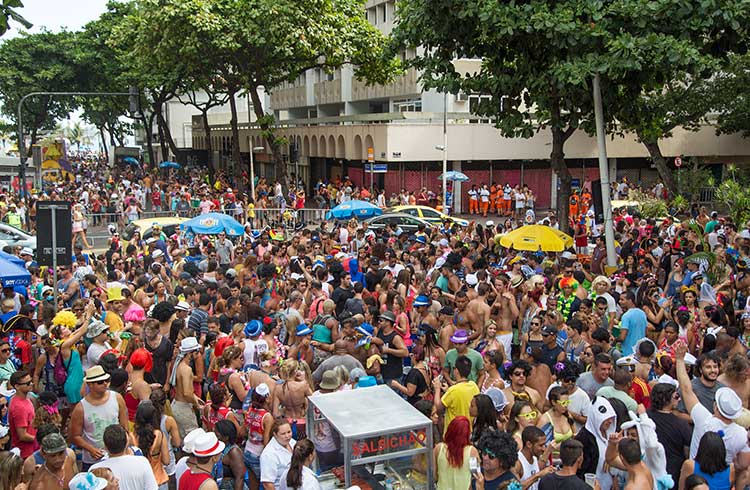
- Night time sightseeing is far more risky, even in locations which are quite safe by day, like Copacabana beach.
Don’t draw attention to yourself
Being inconspicuous as a tourist is almost always a good thing, but is especially valuable in cities with street crime problems. Unfortunately, as a 197cm tall Caucasian man, it’s very difficult for me to go unnoticed, but here’s five other ways I maintained a low profile to avoid unwanted attention in Rio:
- Don’t talk too loudly. Crafty street criminals will not only pay more attention to you, but can also eavesdrop to glean information about your movements, plans, or even where you are storing valuables.
- Don’t wear garish clothes. Keep the pink Hawaiian shirt in your suitcase and wear something less eyecatching.
- Don’t flash your valuables. Keep your phone, wallet and camera out of sight whenever possible.
- Don’t linger outside tourist hotspots. Petty criminals lurk there hunting victims, so start walking immediately to your next location or, as I often did in Rio, have a rideshare car already waiting to pick you up.
Tour guides can also act as security guards
Before I even left my Rio de Janeiro hotel for my first adventure, I’d been repeatedly advised about the dangers I’d face as a photographer walking around the city with a big, expensive camera. These warnings came from a Brazilian passenger on my flight, an immigration officer at Rio airport, and then the concierge at my hotel. Following the advice of these locals, I hired a tour guide, which I then learned has the following safety benefits:
- Rio tour guides essentially double up as security guards. While I was distracted taking photos, my guide was watching my back, making sure no petty thief was creeping up on me.
- Guides can give you honest advice about which parts of the city are dangerous. For example, I’d read online a museum I wished to visit was in a no-go zone for tourists. Whereas my guide said that area was perfectly safe, and so I went there and found he was correct.
Rio’s beaches are riddled with theft
I hired that guide in Rio because I had to do a long photo shoot at Copacabana beach, and locals told me I could easily be robbed walking around there with an expensive camera, even in broad daylight. My guide, Celio, had done so many tours of Copacabana that he recognises many of the local petty criminals, and regularly pointed them out to me.
Here’s three tips for staying safe at Rio’s beautiful beaches:
- Never leave any valuables on the sand, with your towel and clothes, as thieves will pounce while you swim.
- Avoid Rio’s beaches at night, when the cover of darkness makes thieves and robbers more brazen.
- Beware of visiting quiet beaches, where criminals can target you with few or no witnesses around.
Which neighbourhoods are safe?
Rio is a massive, sprawling metropolitan area, home to about 14 million people, which makes it similar in size to New York City. Understandably, then, the safety of its suburbs varies greatly, from no-go slums, to wealthy beachfront areas, and the largely-safe Centro downtown precinct.
Favelas – Rio’s labyrinthine, hillside slums, called favelas, are riven by poverty and drug use, and roamed by gang members who range from petty criminals to savage killers. Do not visit the favelas alone, and reconsider joining guided tours of these slums.
Centro – Rio’s downtown area brims with museums, churches and shopping areas. Its busiest areas are quite safe in the daylight, but most of Centro becomes risky after dark, when street criminals are abundant.
Copacabana – Perhaps the world’s most famous beach, Copacabana is flanked by dozens of tourist hotels, restaurants and bars. During the day, pickpocketing is the main threat, but by night violent crime becomes a serious concern.
Lapa – Bars, restaurants and Samba clubs line the streets of Rio’s chief nightlife area, Lapa. Safety is solid inside its venues. But avoid lingering in its streets at night. If you’re walking from one venue to another, do so quickly.
Scams in Rio
Poverty pushes some Rio residents to make money from scamming tourists, so here’s three scams to watch out for.
Volunteering to take your photo – Some scammers approach foreigners taking selfies at tourist spots, politely offer to take a photo for them, and then flee when the tourist gives them their phone.
Distraction pickpockets – A street criminal will distract you – bumping into you, spilling a drink on you – while their accomplice slips their hand into your bag or pocket.
Fake tickets – Outside famed attractions like Christ the Redeemer, scammers wearing what look like official uniforms may approach you and sell you a fake entry ticket. Only buy attraction tickets from the official booths.
These statements relating to potential scams do not constitute a representation of policy coverage or suitability. See the policy wording for full terms, conditions, limitations, and exclusions.
Travel Insurance for Rio de Janeiro
Even with the right precautions, things can still go wrong in a city like Rio de Janeiro, which is where travel insurance may become an important backup plan. If you’re carrying valuables like cameras or phones, or relying on pre-booked tours and accommodation, a policy may help cover theft (up to policy limits), unexpected cancellations, or medical expenses if you’re injured or fall ill. Street crime is the most common risk here, and while staying alert reduces your chances of trouble, it doesn’t eliminate them entirely. Having travel insurance won’t make Rio safer, but it may give you some financial protection if your trip takes an unexpected turn.
*Travel insurance coverage may not be the same or available for residents of all countries, states or provinces. Please carefully read your policy wording for a full description of coverage
Related articles

Simple and flexible travel insurance
You can buy at home or while traveling, and claim online from anywhere in the world. With 150+ adventure activities covered and 24/7 emergency assistance.
Get a quote
8 Comments
Sou portuguesa, vivo a 52 anos no Rio de Janeiro e NUNCA foi assaltada, roubada, ou sofri qualquer tipo de violência urbana. Não moro e nunca morei em favelas. Moro em um bairro tranquilo e NUNCA presenciei ou sofri qualquer tipo de violência. Os cariocas e o povo brasileiro são de forma geral, pessoas de bem. Violência há em toda parte do mundo, mas aqui não há ataques terroristas e nenhum avião explodiu o Cristo Redentor.
I am Portuguese , I live to 52 years in Rio de Janeiro and was NEVER robbed , stolen, or suffered any kind of urban violence. I do not live and never lived in slums. I live in a quiet neighborhood and NEVER witnessed or suffered any kind of violence. Cariocas and Brazilians are generally good people . Violence is everywhere in the world , but here there is no terrorist attacks and any plane exploded Christ the Redeemer .
My wife and I got robbed in Rio on Saturday June 4th, 2016. We traveled in almost all European countries, US, Canada, even Mexico multiple times. This is the very first time we have such problem.
The robbery happened on Copacabana beach around 11:30AM, the place and time are supposed to be safe. However it just happened. 3 young people grabbed my wife's purse and my bag, and then ran away. I believe there are more people around to support them.
When reporting this case in Rio Tourists Police Station (yes, it's just for tourists so you know such problems are common there), another German couple told us they were attacked and robbed by a group of people with knifes when ridding a taxi. The group of people just stopped the taxi and robbed them everything including passports. They had to work with German agent and Brazil immigration office on the passport and visa problems. So riding a taxi doesn't guarantee safety in Rio.
CNN reported earlier that Olympic tickets were sold only 6% so far. There must be reasons for this. Security is probably one, or big one, of them.
So be very very careful if you HAVE TO go to Brazil at this time.
Great article ! especially the part about the favelas.
I created a map of dangerous areas and scams of Rio on my website, you can check it out here http://www.city-safe.com/americas/brazil/rio-de-janeiro/
I don't understand why anyone would go to somewhere that is so unsafe. From what I read above I certainly wouldn't go there even though I've been all over the world, often alone.
A 15 year old kid just attempted to rob me on the beach in Copacabana pointing a plastic knife at me (one of those knives that break when you try to cut through a piece of chicken in the park during a pic-nick, lol). I was able to run away and duck in a hotel.
I was very stupid walking alone late at night along the walkway in Copacabana, although my hotel is just a few hundred meters away from there. I should have asked a taxi driver to drop me off right at the entrance. After a very fun night in Lapa I decided that I could take a walk before going to bed just to take some air, I was sadly mistaken.
I am traveling by myself, I knew before coming about the safety issues and even before reading this article I was told to take all the precautions listed, which I did until tonight.
If you stay where it's crowded and well lit without wondering off, avoid trusting or accepting things from sketchy character and are aware of your surroundings it's likely that nothing will happened, if you let your guard down like I just did tonight, you are very likely to be mugged or worse.
It's a great pity because most of the people I met so far are lovely and the city is one of the most fun and most beautiful I've ever visited.
Enjoy Rio but beware....
I have just been scammed by a taxi in Rio for a lot of money. When we arrived at the Cathedral we offered to pay by credit card but it apparently didn’t work, we were parked under a bridge so he moved the car out from under the bridge. He had a mobile phone and a card reader. The card reader had an official looking sticker over the small screen so you couldn’t see what it said. Naively I thought this was to protect my pin! He showed the mobile phone with the amount and again naively I assumed the 2 machines were connected. I put my pin into the machine but it apparently did not work so he drove away from the centre to a place where he said he had a signal and tried again. He asked me to put in my pin again which stupidly I did. He was of course credible, all scammers are! He did not give me a receipt, which was also a mistake as now I can’t prove the fraud. I discovered a few hours later that 2 large payments had been take. Please be aware!
I am a female in my late 70s. In June 2025 I booked a private tour for myself and traveled to Rio, Iguassu Falls, Salvador, the Pantanal and the Amazon. While I was accompanied during the day with a tour guide, there were days when I had free time. I ran on the beach, talked to people, visited museums, took the subway alone, and had a glorious time. I was always conscious about people around me (just as I am in my hometown), usually didn't go outside at night, and only took a small amount of cash with me wherever I went. I think the Brazilian people are fantastically friendly and fun loving, they showed me respect and I would love to travel there again. Not one problem.