Just how safe is it to travel South Africa? From petty theft to serious crime, we asked a seasoned traveler to share her top travel safety tips for first-time visitors.
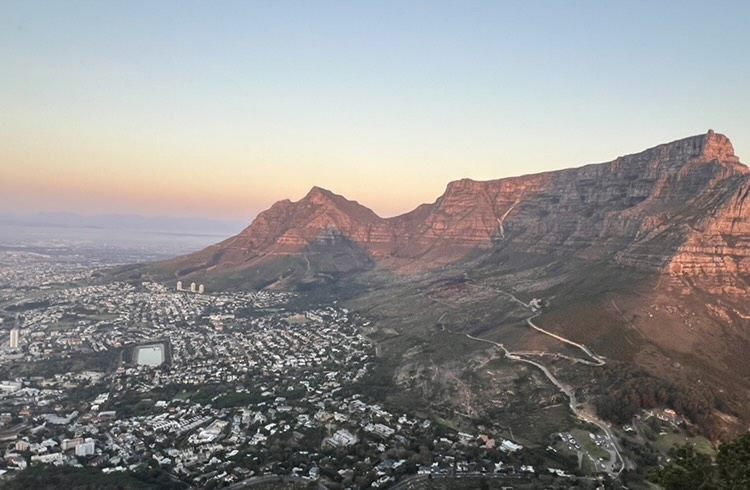 Photo © Alicia Erickson
I was hiking the Chapman’s Peak Trail when I stumbled upon a warning sign: “Cape Cobra and Puff Adder Breeding Zone.” Somehow, I’d taken a wrong turn. I scrambled atop a rock to avoid the tall grass where venomous snakes might be lurking and plotted my route back. That moment perfectly captured my 10+ years of exploring South Africa: beautiful scenery, unexpected surprises, and learning to stay safe while experiencing one of the most diverse and beautiful countries in the world.
From road-tripping along the Garden Route to surfing in Jeffreys Bay, exploring small game reserves and dancing until sunrise at AfrikaBurn, I’ve seen the Rainbow Nation from countless perspectives. And yet, like many travelers, I’ve heard stories of car hijackings, theft, and other dangers before every trip.
So is South Africa safe for tourists? The answer is yes — if you take a few precautions and stay aware of your surroundings. In this guide, I’ll share practical safety tips for Cape Town, advice for solo and female travelers, insights into safaris, and guidance on health and emergencies, all based on firsthand experience.
Why South Africa Has a Reputation for Safety Concerns
South Africa has a complex and volatile political history shaped by decades of apartheid, a system of racial segregation and discrimination that officially ended in 1994 but whose effects are still felt today in the form of economic inequality, racial tension, and segregated townships (disadvantaged urban areas originally created under apartheid laws). Official country travel guidance notes that violent crime, including armed robbery and carjacking, remains a concern across parts of the country, particularly in large cities and in townships.
In order to explore South Africa safely, it’s important to have a basic understanding of the country’s sensitive history, be aware of potential issues, and know where not to go.
Cape Town Safety Tips
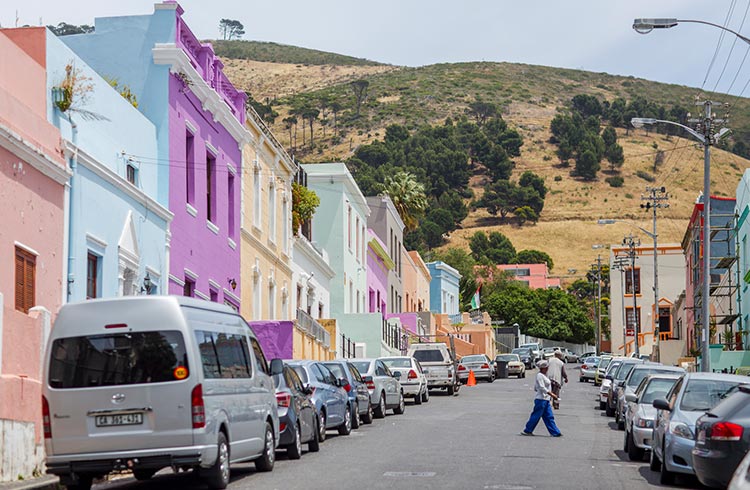
Cape Town is South Africa’s most popular city for travelers, and while it offers incredible views of Table Mountain, bustling markets, beaches on the Atlantic, and world‑class attractions, visitors should still be aware that it has higher crime rates than many international destinations, particularly outside of well‑traveled areas.
However, most serious incidents occur in areas tourists don’t typically visit, and many problems can be avoided simply by following common‑sense precautions in the city’s tourist zones:
- Avoid walking at night
- Go hiking with a friend
- Be careful of belongings in Long Street, a busy nightlife area where pickpockets are common
- Don’t leave your belongings unattended at beaches
- Avoid the township areas after dusk.
- Stay vigilant when taking money out of an ATM.
- Use a trusted taxi service to and from the airport.
- Don’t accept someone’s help to carry your bags at the airport.
Transportation & Road Safety in South Africa
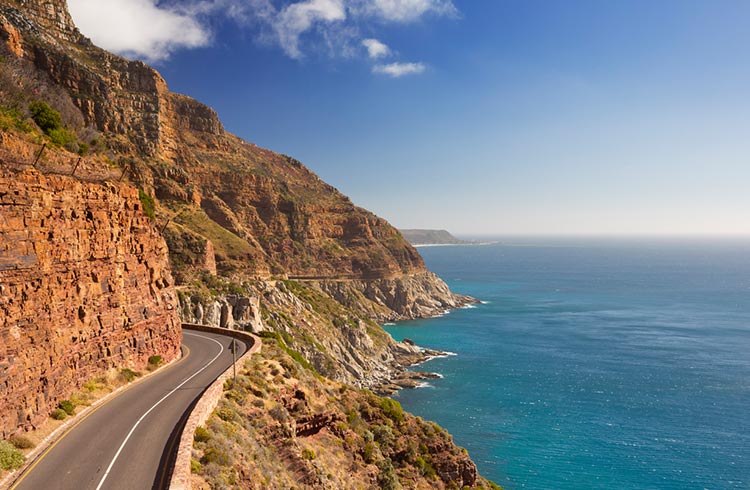
Given that South Africa is a sizeable country, you’ll probably want to explore at least a few of its regions, each distinct in culture and topography. While in-country flights are relatively inexpensive and frequent between major cities, many of the smaller towns and wilderness areas aren’t accessible by air. Whether you’re looking to head into wine valleys of Stellenbosch and Franschhoek, journey along the winding coastline of the Garden Route, or explore the vast Kalahari Desert, a road trip is a fantastic way to explore South Africa.
I’ve rented a car each of my visits to South Africa. Roads vary in quality from new thoroughfare to potholed roads and dirt paths through nature reserves. Keep a few things to keep in mind to stay safe while on the road:
- Drive on the left.
- Learn the rules of the road, including hovering on the shoulder to allow faster cars to pass.
- Keep valuables with you and out of sight, even when driving.
- Navigate narrow, winding roads carefully.
- Take extra precautions if driving at night (or avoid altogether), including not stopping in rural areas after dark. Car hijackings do happen.
While public buses and taxis off the side of the streets are generally not recommended for safety reasons, rideshare apps like Uber and Bolt are commonly available in major cities like Cape Town and Durban. Some private long-distance buses are safe to take, including the Bazbus, which is a popular way for backpackers to explore the country.
Safari Safety
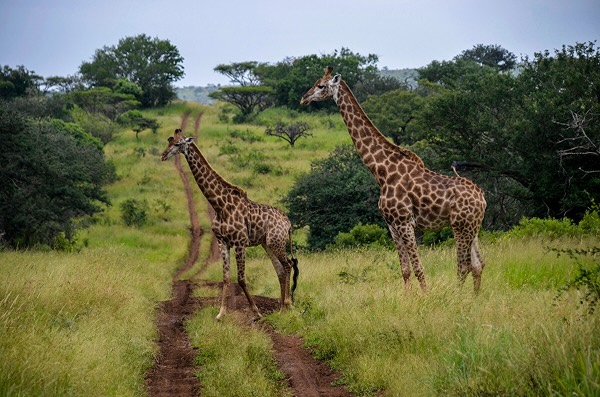
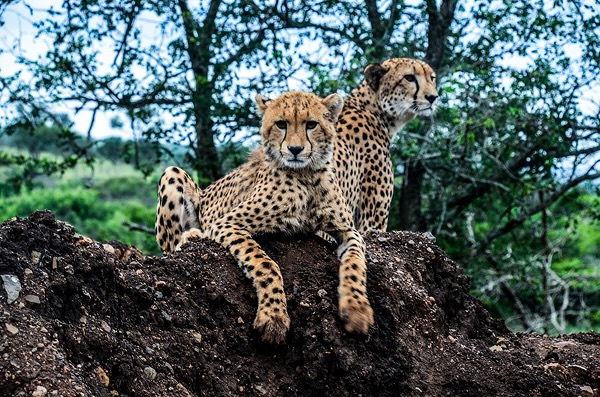
With 19 national parks and over 200 reserves, wildlife is plentiful in South Africa. It’s a fantastic country for safaris, where you can spot lions, elephants, zebra, giraffe, and much more in places like Kruger and Hluhluwe–iMfolozi National Parks. There’s the option to hire a guide and driver or self-drive. Many safari camps include guided game drives with experienced guides who can help you navigate the reserve, cue you in on wildlife safety, and help you spot for your favorite animals.
If you self-drive, a 4x4 vehicle is important to navigate the bumpy terrain. It’s best to have some basic knowledge around wildlife safety, as well. It may be tempting to drive the vehicle as close as possible to capture the best photos but remember that you’re a visitor in the home of wild animals. Some animals, including elephants, are territorial, and can charge a car if it thinks the car is in its territory.
Outdoor adventure safety
South Africa is a dream destination for nature lovers. As you would anywhere, come prepared with plenty of water and sun protection for hikes. UV rays are strong due to a thin ozone layer. Poisonous snakes do exist, so stay cautious while you’re on the trails. If you’re heading into the water, know that in certain areas, currents can be strong. Be careful where you go swimming, and if you’re a new surfer, only surf beginner-friendly waters. Don’t be afraid to take a lesson either. Water sports are huge and quite affordable in South Africa; it’s a great place to brush up on skills.
Solo Travel, LGBTQ+ Travel, and Women’s Safety in South Africa
I’ve solo traveled through South Africa many times and have had no issues. South Africa isn’t conservative in the same ways that other countries in Africa can be for women—but it is important to stay vigilant and take precautions like avoid walking or driving alone at night. If you take a wrong turn into a seedy-looking area (I personally have), leave as soon as possible.
South Africa has plenty of nature and adventure-abundant destinations with social hostels that are perfect for solo travelers, including:
- The Garden Route (spots like Knysna, Wilderness, Jeffry’s Bay, and Plettenberg Bay)
- The Drakensberg Mountains
- Cape Town and the greater Western Cape area
- Lucia, KZN
South Africa is the most LGBTQ+ friendly country on the continent. Gay marriage was legalized in 2006, and Cape Town is informally considered the “gay capital” of Africa, with plenty of gay-owned businesses and nightlife spots, including an annual Pride event.
Health and Emergencies
Tap water is generally safe to drink in major cities, though quality varies in rural areas. Malaria is present in a few regions, including KwaZulu-Natal and Kruger National Park, and you’ll want to talk with your doctor regarding prevention.
If you experience an emergency while in South Africa, the big cities offer high-quality care and services. In rural areas, services may be limited though.
Related articles
Simple and flexible travel insurance
You can buy at home or while traveling, and claim online from anywhere in the world. With 150+ adventure activities covered and 24/7 emergency assistance.
Get a quote
5 Comments
Great article, thanks for the tips! Indeed, South Africa has some of the most stunning landscapes on earth and is the perfect spot for an adventure! Unfortunately, the country is also tainted by violent crime and scams: https://travelscams.org/africa/common-tourist-scams-south-africa/
Do be wary of the pickpocketing, robberies, muggings, fake tour guides, beach thefts, drink spiking, currency switcheroo, tourist prices, car pull over scam, fake airport taxi drivers, luggage theft, bogus airport employees, carjacking, car crash scams, smash and grab, ATM scams, fake police, corrupt police and many more!
Im sorry but the info given in this article is trash. This is a violent and dangerous country. Hijackings are very brutal. ATM bombing are people with AK 47's, farm murders are out of control, we are the gang Mecca for various cartels and gangs from Riussians and Triads to numbers gangs.
I am very familiar with crimes in my field. Don't say muggings, scams, pickpocketing etc. Violent crime, murder is 53 people in SA per day, rape is at an all time high and protests are never peaceful. Bad article.
Emsie, you need to get out more and btw what are you complaining about? I mean "we are the gang Mecca"? I don't think so lol
Farm murders are out of control? You mean in Nigeria where they're killed 10, 20 or 30 at a time?
Final one: Are you one of the ones manipulating South Africa's WikiTravel page?
AFAIK, the only high risk travel advisory South Africa has (and I know quite a few) is the mostly city-based crime and safety report from the State Department on a sister website that I believe is called OSAC. The four largest SA cities are cited and all have the same, slightly above average ranking. The other half of the State Department advice (they often differ slightly) which is on the main website gives the whole country including all urban and rural areas a low security risk of No. 2 (on a scale of 1 to 4 with 4 being worst).
Apart from Hungary's version which puts SA on a mid-level 2 (on a scale of 1 to 3), all other national travel advice sites I've seen give South Africa a low risk rating. Every single one, apart from the two examples I've given and one of those still isn't high risk.
Ignore some of the others like Australia and Canada, the high risk advice given for South Africa and many others is purely down to Covid. Unlike the US advice they don't separate security risk from, say, pandemics which I've just alluded to. Very unhelpful and confusing, I don't understand why they do it like that but that's them.
A couple of these advice sites I haven't looked up since before the pandemic (i.e. Hungary), it's possible they've put everybody on high risk as well.
Good piece but you should use centralised sources for the crime and so on, SA looks a lot worse than it is because it reports the phenomena much more accurately than many countries. Again, note the distinct lack of high risk travel advice issued, corruption levels are low etc.
Corruption isn't only a lot lower than most African countries (horribly corrupt [and very violent] continent outside of Southern Africa), it's lower than most countries in the entire world.
PS: DO NOT use the WikiTravel page for South Africa. Not until it gets sorted out. Absolute joke.
I've been to Capetown 3 times, never ANY problems and I broke these rules on many occasions. The article over dramatizes crime, at least in tourist areas.
First, thanks for the article Jacqui. It’s never easy writing about any countries downsides when it comes to travel. What do you include? What do you exclude? Everyone’s idea of what’s ‘dangerous’ is different, so it becomes a little subjective. I think this piece has a balanced view though and rightfully points out some of the issues associated with travelling in South Africa.
Like many places, it’s not perfectly safe. If people want to have zero risks, then I’m afraid they’ll need to stay locked in their own homes. And even that might not be completely safe! You only have to do a quick search on Google to work out there is ‘danger’ lurking everywhere – and most of it is minor. Sure, there are serious crimes, just like in many other countries, but I think it behoves every traveller to be smart when travelling, which you’ve clearly indicated in your article.
Taking basic precautions should be standard practice. Do that and I’m sure any visitor to South Africa will come away with beautiful memories and cards full of great images. I think people should think positively and embrace travel, no matter where it takes them. Thanks again! You live in a beautiful country.